

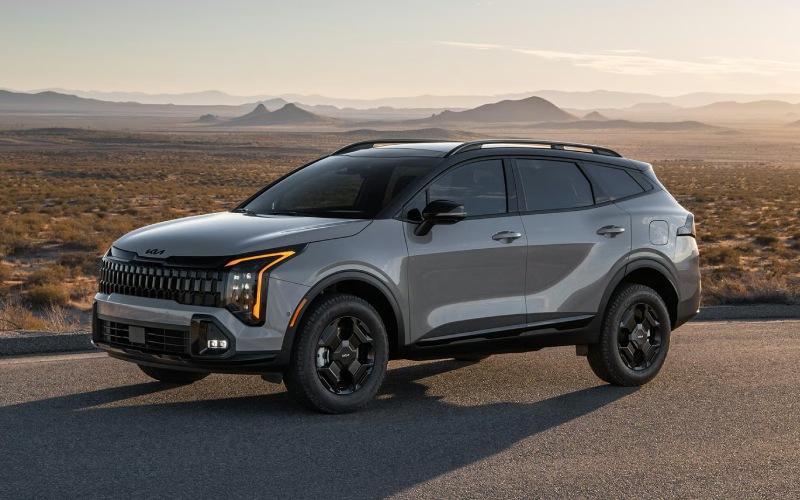
Matt Blatt Kia of Abington – Which AWD system gives you more confidence for city streets and backroads around Philadelphia, PA?
Shoppers often narrow their short list to two proven performers: the Kia Sportage and Honda CR-V. When the question is which all-wheel-drive system and traction tech serve you better for everyday errands, weekend errands-turned-adventures, and rain-slick commutes, it helps to look at how each brand approaches traction management and drive modes. The Sportage is available with Active All-Wheel Drive that uses torque-vectoring to actively distribute power between the axles, and it layers in Multi-Terrain Mode so you can dial in mud, snow, or sand calibrations to optimize response. The CR-V counters with Real Time AWD™ tuned for stability on changing surfaces and offers a Snow mode for slippery conditions, while hybrid trims add Sport mode for extra responsiveness. Both are capable. What sets them apart is how many tools you have at your fingertips and how naturally those tools fit your day-to-day.
In practical terms, city-to-suburb driving challenges traction in small ways as often as big ones: damp leaves on shaded streets, loose gravel along shoulders, and construction zones that blend broken pavement with dust. The Sportage’s torque-vectoring logic and terrain-specific modes help reduce wheelspin and improve directional stability in those in-between situations. It’s not about conquering a boulder field; it’s about feeling composed when you transition from a wet parking garage ramp to an uneven alley, or when a rainy forecast lingers over your errands. The CR-V’s Real Time AWD™ is a reliable partner for mixed weather, and TrailSport Hybrid adds a suspension tune and all-terrain tires for mild trails. If you prefer proactive traction tools that you can set yourself, the Sportage’s approach is simply more versatile.
- Traction toolkit: Sportage offers torque-vectoring AWD and Multi-Terrain Mode (mud/snow/sand) to tailor traction; CR-V offers Real Time AWD™ with Snow mode and hybrid Sport mode.
- Parking and awareness: Sportage makes a 360-degree Surround View Monitor available, helpful for tight urban garages; CR-V does not offer a surround-view camera.
- Blind-spot confidence: Sportage’s available Blind-Spot View Monitor places a live feed in the cluster; CR-V uses radar-based alerts without a lane-view camera.
- Everyday connectivity: Both SUVs include Wireless Apple CarPlay® and Wireless Android Auto™; Sportage adds available Dual Panoramic Display (~24 inches combined).
- Ownership peace of mind: Kia’s 10-year/100,000-mile limited powertrain warranty adds long-range reassurance.
What about hybrid availability? The Honda CR-V’s hybrid system is standard on Sport Hybrid, Sport-L Hybrid, TrailSport Hybrid, and Sport Touring Hybrid trims, delivering responsive acceleration with a familiar Honda character. Kia also offers a Sportage Hybrid in the broader lineup, bringing strong low-end torque and quiet operation to city drives and highway merges. If you split time between gridlock and open expressways, both hybrids shine; if your routes include gravel pull-offs and unpaved access roads to parks, the Sportage’s terrain calibrations remain a meaningful advantage even when powertrains differ.
Technology often tips the scales for families who juggle long days and packed schedules. The Sportage transforms the cabin with an available Dual Panoramic Display that stretches across the dash, making navigation and camera views feel natural. Add standard Wireless Apple CarPlay® and Wireless Android Auto™ and available Harman Kardon® audio for excellent clarity at low volumes, especially useful during conference calls or quiet podcasts. The CR-V keeps things simple and effective with a 9-inch touch-screen standard on all trims, wireless smartphone integration, and convenient wireless charging. Where the Sportage separates itself is in available vision-aiding tech: the Surround View Monitor and Blind-Spot View Monitor make tight maneuvers and lane changes more transparent, which eases stress in crowded parking structures and multi-lane merges.
Shopping with confidence is as much about support as it is about specs. Matt Blatt Kia of Abington provides guidance tailored to your priorities and time frame, and our team is equally ready to walk through traction features in detail or set up a back-to-back test drive that highlights each SUV’s strengths. For regional shoppers, we are serving Philadelphia, Huntingdon Valley, and Glenside with a clear focus on everyday drivability, smart tech, and ownership experience that reduces friction long after delivery.
Frequently Asked Questions:
Does the Kia Sportage’s Multi-Terrain Mode make a difference on paved roads?
Yes. While it is designed for loose surfaces, the calibrations can help manage wheelspin and throttle response when you transition from rain-slick pavement to painted lines or metal utility plates, adding a more settled feel in everyday conditions.
Is a 360-degree camera really useful if I’m an experienced driver?
Absolutely. A surround-view system is like having a spotter when clearance is tight. It helps you judge curbs, pillars, and low obstacles, protecting wheels and bumpers in tight garages and crowded street parking.
How do the SUVs compare for smartphone integration?
Both offer Wireless Apple CarPlay® and Wireless Android Auto™, so your core apps are covered. The Sportage can pair that with an available Dual Panoramic Display, which gives navigation and split-screen views more space.
Which is better for occasional trailheads and gravel pull-offs?
Both can handle light off-pavement use, but the Sportage’s torque-vectoring AWD and Multi-Terrain Mode give it an edge in mixed surfaces, especially where traction changes quickly from firm dirt to loose gravel or sand.
Request more 2026 Kia Sportage information
Connect with us


Archives
Categories
 Warranties include 10-year/100,000-mile powertrain and 5-year/60,000-mile basic. All warranties and roadside assistance are limited. See retailer for warranty details.